

How Do I Prepare a Concrete Floor Before Laying New Flooring?
Posted by Yasmin Ilarionos on 14th Sep 2026
How Do I Prepare a Concrete Floor Before Laying New Flooring?
Good flooring starts with good subfloor preparation. Before installing LVT, vinyl, carpet or another floor covering over concrete, the surface needs to be assessed, prepared and, where required, smoothed to create a suitable base for the installation.
From moisture testing to mixing and applying a levelling compound, here's a simple guide to the key stages – and some of the tools and products that can make the job easier.
1. Check the Concrete for Moisture
Before applying preparation products or installing flooring, the moisture condition of the concrete should be assessed using an appropriate moisture-testing method.
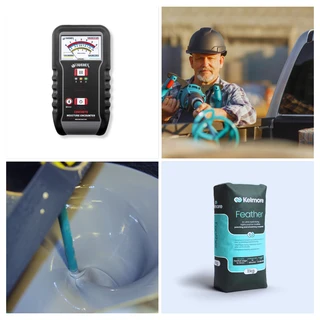
A Tramex moisture meter can be used as part of the assessment process, giving installers a non-destructive way to identify and evaluate moisture conditions within a concrete floor.
If moisture is detected, further testing and an appropriate moisture-management system may be required before proceeding.
Recommended: Tramex Moisture Meter
2. Inspect and Prepare the Surface
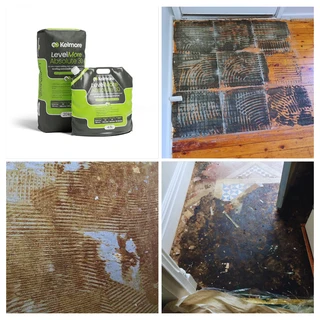
Next, check the concrete for contaminants, laitance, old adhesive, cracks, holes and uneven areas.
The floor should be clean, sound and appropriately prepared before subsequent products are applied. Any contaminants that could interfere with adhesion need to be removed, and damaged areas should be repaired using a suitable floor repair product.
For smaller imperfections and localised smoothing, Kelmore Feather is one of many options available at Floormart.
3. Prime Where Required
Priming requirements depend on the substrate and the levelling compound you're planning to use.
Kelmore PrimeMore Universal is designed to regulate the porosity of absorbent backgrounds and can be used as part of a Kelmore floor preparation system.
Always follow the technical data sheet for the levelling compound you're using to determine whether a primer is required and the correct dilution or application method.
4. Mix Your Levelling Compound Correctly
Correct mixing is essential for achieving the intended consistency and performance of a levelling compound.
When preparing products from the Kelmore LevelMore range, always follow Kelmore's specified water or liquid quantities and mixing instructions.
A professional Collomix mixer and mixing paddle can make this stage quicker and more consistent, particularly when preparing multiple bags on larger installations.
Floormart stocks a range of Collomix mixers and paddles designed for professional flooring applications, including options for mixing levelling and smoothing compounds.
5. Apply and Spread the Levelling Compound
Once mixed, the levelling compound should be poured and distributed across the prepared floor within the product's stated working time.
For larger areas, a CAM rake can help spread the compound across the floor and control the application depth.
This can be particularly useful on commercial installations or larger open areas where an even application needs to be achieved efficiently.
6. Allow the Floor to Dry
Don't install the final floor covering until the levelling compound is ready to receive it.
Drying times vary between products and can also be affected by application depth and site conditions, so always refer to the manufacturer's current technical data sheet.
For example, Kelmore LevelMore Pro can receive resilient floor coverings after approximately 3 hours at 20°C, according to Kelmore's published technical information.
Ready for Flooring
Preparing a concrete subfloor isn't simply about applying a levelling compound. The complete process should consider the condition of the concrete, moisture, repairs, priming, mixing and application.
Having the correct equipment can also make the process more efficient:
Test with Tramex → Repair & Prime → Level with Kelmore → Mix with Collomix → Spread with a CAM Rake → Install your flooring
At Floormart, you'll find professional subfloor preparation products, moisture testing equipment, mixers, paddles and application tools to help take your installation from bare concrete to a floor that's ready for its final covering.